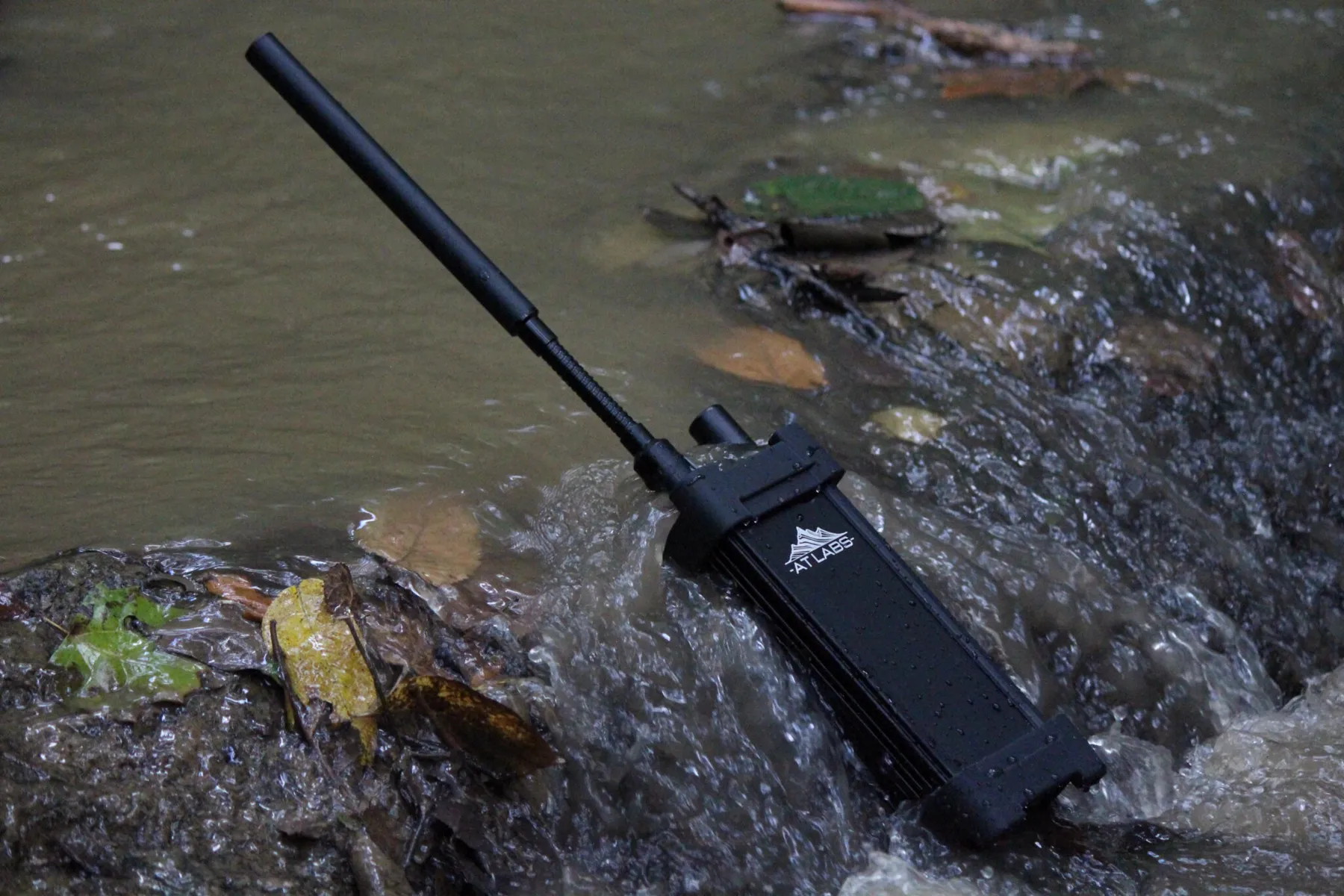
An AT Labs mesh radio standing in fast-moving whitewater, antenna extended, field-tested in a Tennessee creek

Comms that don't quit when the grid does.

When cell towers, radio repeaters, and power are gone, AT Labs hardware keeps your team connected, visible, and accountable, with no infrastructure required.

Field-proven in Hurricane Helene Built and tested in Tennessee
Trusted in the field by Cumberland County Rescue Squad/ TN Assoc. of Rescue Squads/ City of Tulsa, OK/ Vexsl Corp/ S2 Underground

When the network fails, people go missing.

The first thing a disaster takes is the ability to talk. The second is the ability to find your own people.

Cell networks overload. Repeaters lose power. Roads close and crews split up. In the gap between "we lost contact" and "we found them," minutes decide outcomes. AT Labs was founded on a single conviction: no responder should ever go dark with no way to be reached or found.

Cell down. Towers overloaded or destroyed, so calls and texts stop getting through.
Radio dead. Repeaters off-grid, crews out of range of each other.
Power gone. The grid is down, with nothing to charge a device for days.
People scattered. Crews split up with no shared map of where anyone is.

A network with no single point to break.

A normal radio talks to a tower. Knock out the tower and everyone goes silent. A mesh network has no tower to knock out: every radio is also a relay, so the network routes around whatever just failed.

Watch the network below. A message leaves the command node and hops radio to radio toward a team in the field. Knock a link out and the signal does not stop, it finds another way through.

Live demo. One link drops, the signal reroutes.

Every radio is a relay

Each device both sends its own messages and passes along everyone else's. The more radios in the field, the wider and stronger the network gets, with no base station needed.

The signal finds its own path

If one radio drops out (dead battery, out of range, underwater) traffic automatically reroutes through the others. There is no central piece whose failure takes the whole network down.

You see everyone, encrypted

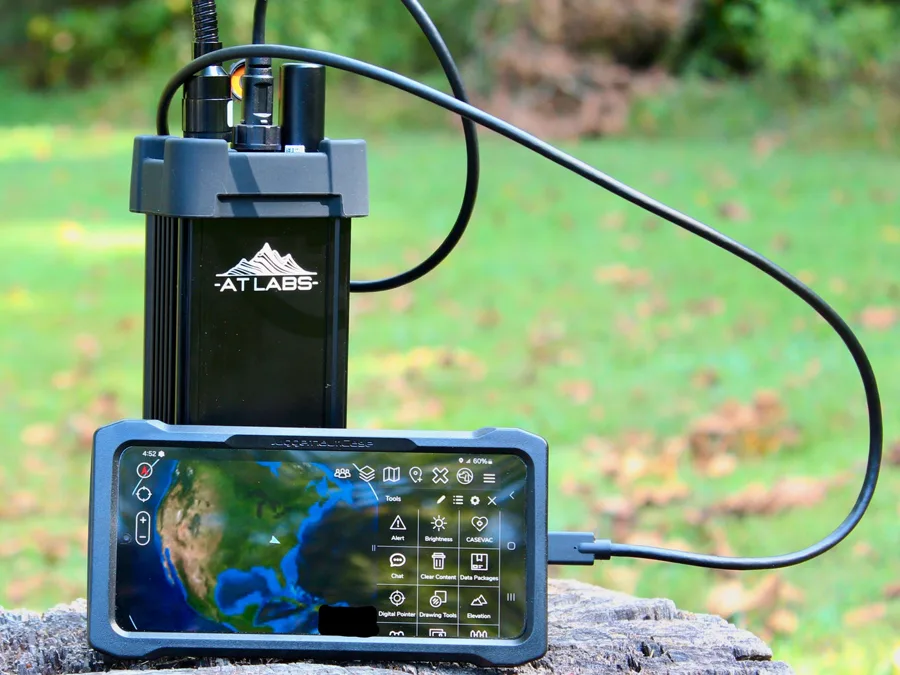
Messages, GPS positions, and team status move across the mesh, encrypted end to end. Pull it up on your phone or a tablet running ATAK and watch the whole team in real time.

In plain terms: hand a few of these to a crew and they can talk, text, and track each other for miles, even with zero cell service, zero power grid, and zero setup. That is the whole point.

Built for the moments infrastructure isn't there.

The same network solves the same problem across very different teams: stay in contact and keep eyes on your people when there is nothing to plug into.

Search & rescue

Track every searcher on one shared map across canyons, forests, and dead zones, so command always knows where each team is and no one drops off the grid.

Disaster response

When a storm takes the towers, stand a network up in hours, not weeks. Exactly what AT Labs radios did across Appalachia after Hurricane Helene.

Utility & remote crews

Keep linemen, pipeline teams, and backcountry workers connected far past the edge of cell coverage, with battery life measured in weeks for fixed sites.

Prepared citizens

A family or neighborhood net that needs no carrier and no monthly bill. License-free, encrypted, and ready the day the cell network is overwhelmed.

A normal radio

Depends on something you don't control

  • Talks through a tower or repeater. Lose it and everyone goes quiet.
  • One point of failure can take the whole channel down.
  • Range is fixed by where the infrastructure happens to be.
  • Adding handsets does nothing to extend coverage.
An AT Labs mesh

The network is the team, not the tower

  • Every radio relays for the others. No tower to knock out.
  • A dropped node just reroutes. The network keeps running.
  • Coverage grows every time you add another radio.
  • Encrypted, license-free, and live the moment it powers on.

Rugged hardware, made to be understood.

Two radios, built and tested in Tennessee from domestic and allied-sourced parts. AT Labs designs and manufactures them; our retail partner Constellation Response handles the sale.

AT Labs RM-1 mesh radio on a stump beside a phone showing the ATAK team map

RM-1

$545
The workhorse mesh radio

The radio that proved itself in Hurricane Helene. Sealed aluminum body, days of battery, and license-free encrypted messaging that works the moment you turn it on. Built for first responders, utility crews, and prepared citizens alike.

  • + Encrypted text and GPS over the Meshtastic network, no license or fees
  • + Up to roughly 50 miles range in open terrain; 5 to 30 days on a charge
  • + Sealed aluminum housing built to shrug off water, dust, and drops
  • + Fits a standard radio pouch; charges over waterproof USB-C
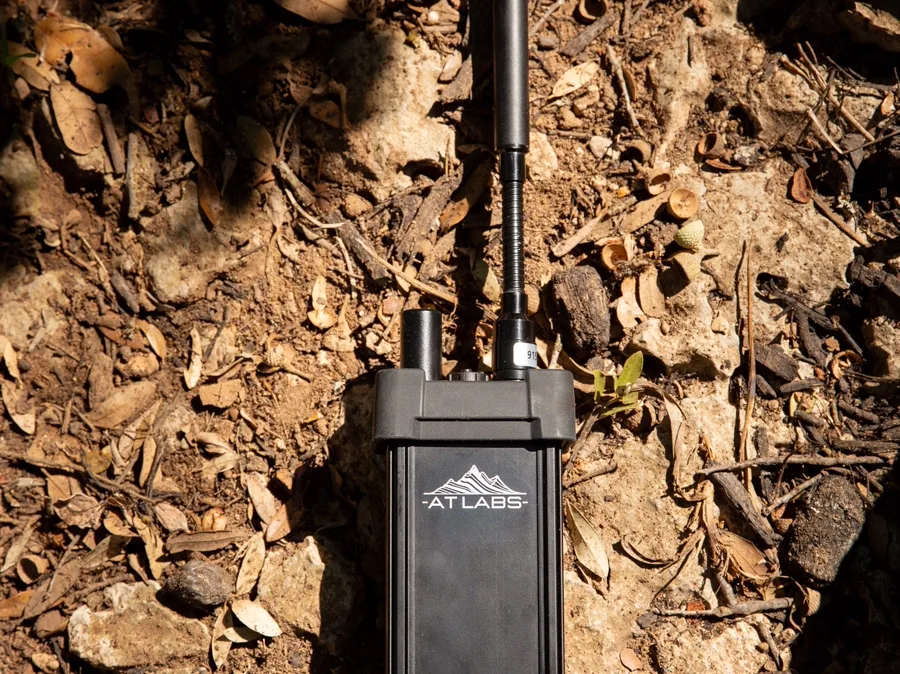
AT Labs RM-2 ruggedized mesh radio on rocky ground, antenna up, AT Labs logo visible on the housing

RM-2

$795
The next step up, adds voice

Everything the RM-1 does, plus near-real-time voice over the mesh through ATAK. A new American-made board doubles the transmit power for licensed operators and widens the pipe for richer data. The choice when you need to talk, not just type.

  • + Push-to-talk voice across the mesh via ATAK or Akita vMail
  • + American-made LoRa board: 2W transmit (licensed) and more bandwidth
  • + Extruded-aluminum housing with shock bumpers and sealed I/O
  • + Designed and assembled in the USA; made to order

Both radios are sold through our official retail partner, Constellation Response. Not sure which one fits your team? Ask me anytime; that is what I am here for.

RM-1 or RM-2, side by side.

Start with the RM-1 for text, data, and tracking. Step up to the RM-2 when your team needs voice.

 RM-1RM-2
Price$545$795
Best forText, data, GPS trackingEverything in RM-1, plus voice
VoiceNot includedNear-real-time via ATAK / Akita vMail
Transmit power1W (license-free)2W (licensed HAM operators)
ProtocolsMeshtastic, MeshCore, ReticulumMeshtastic, MeshCore (Reticulum in dev)
HousingSealed aluminum, IP67*Extruded aluminum, shock bumpers, IP68*
Battery10,000 mAh (5 to 30 days)10 Ah Li-ion (days per charge)
OriginDesigned and tested in TennesseeDesigned and assembled in the USA

* IP67 / IP68 and MIL-STD-810H ratings are in certification; housings are built to those targets.

Tested where it counts.

When Hurricane Helene took out the towers across Appalachia, AT Labs radios kept relief crews talking across the dead zones the storm left behind.

Field-proven during Helene recovery operations. Designed and built in Tennessee.

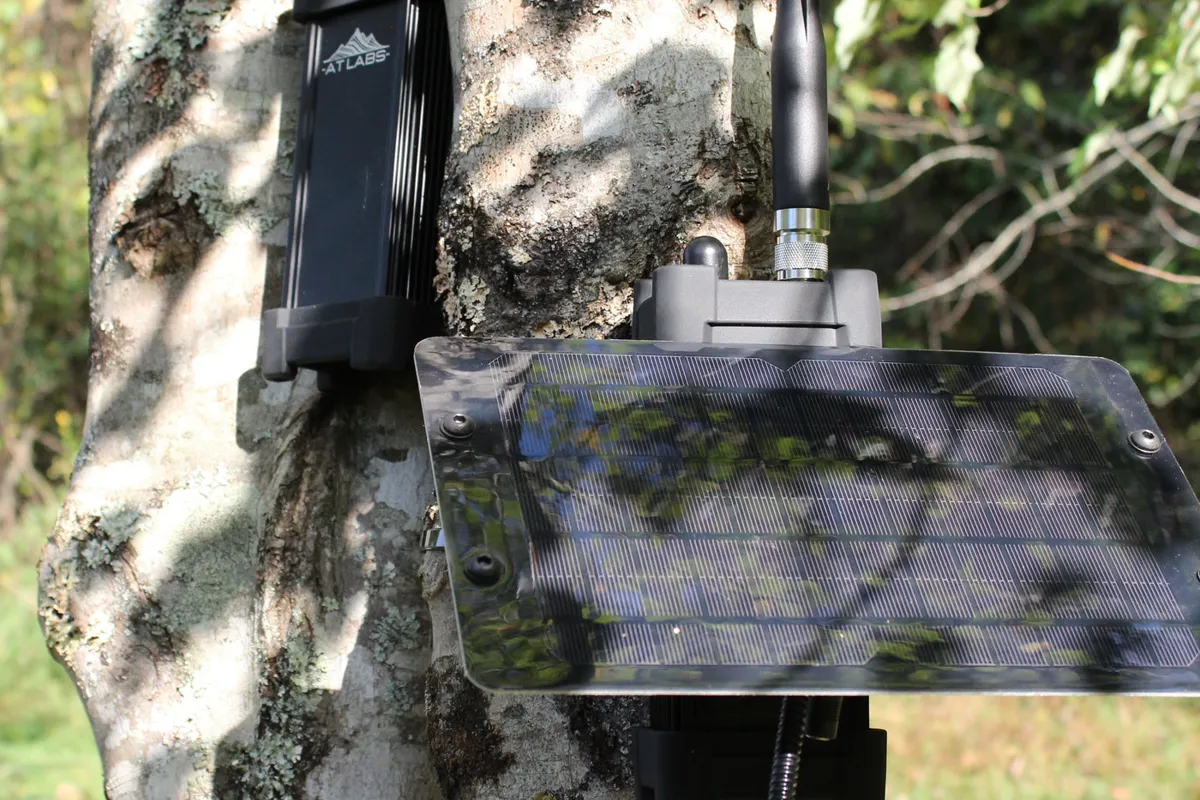
An AT Labs infrastructure mesh radio mounted to a tree in the field, extending the network across remote terrain

Straight answers.

Do I need a license to use these? +

The RM-1 runs license-free over the Meshtastic network, so anyone can use it for encrypted text and GPS out of the box. The RM-2's higher-power voice mode is intended for licensed HAM operators.

How far does it actually reach? +

A single hop can reach roughly 50 miles line-of-sight in open terrain on the RM-1. In practice range compounds: because every radio relays, each unit you add extends the network further than any one device could reach alone.

What is Meshtastic? +

Meshtastic is an open, encrypted, license-free mesh protocol. AT Labs radios interoperate with any Meshtastic node nearby, so your network gets stronger as more compatible radios come into range.

What is ATAK, and do I need it? +

ATAK (Android Team Awareness Kit) is a shared mapping app that shows every team member's position in real time. The RM-2 carries near-real-time voice and positions straight into it. You can run the radios without ATAK, but it is where the situational-awareness picture comes alive.

Where are they made? +

Designed, built, and tested in Tennessee, using domestically manufactured and allied-sourced components. The RM-2's LoRa board is American-made.

How do I buy one? +

AT Labs builds the hardware; our retail partner Constellation Response handles sales. You can order directly from their store, and if you want help choosing, reach out and I will point you to the right radio for your team.

Kenny Cornett photo

Why I build this

I've seen what losing contact costs.

Before I ever joined my department, a responder got separated during an operation and it took days to find him. That stayed with me. I'm a firefighter and a mechanical engineer, and I kept asking the same question: why are the people who run toward danger so often the ones who go dark?

If you can see the danger and refuse to act, that is the failure.

So I started building. AT Labs makes hardware that keeps teams connected, visible, and accountable when the infrastructure is degraded, denied, or gone entirely. Every device is designed around one idea: survivability of the environment, the power, and the signal itself.

Kenny CornettFounder, AT Labs (Appalachian Technologies)

Ask a question

Not selling you. Helping you get it.

People come to me to understand what this gear actually does and whether it fits their team. There is no pressure and no pitch, just a straight answer from someone who builds it and uses it.